One thing is clear – organisations providing customer service and customer contact in 2026 have far more technology provider options than they did even two years ago. There is no one standout provider, but the market has been turned upside down by the arrival of GenAI.
At Davies Hickman we have reviewed key providers of customer facing GenAI chatbots to take a snapshot of their marketing claims in the current market.
That matters because AI chatbots are no longer being positioned as experimental tools or simple website add-ons. They are beyond rules based or deterministic chatbots of old. They are increasingly being presented as practical solutions that can improve customer experience, automate routine interactions, and support more efficient service delivery. The world of Agentic AI or AI Agents is emerging fast.
Our scan looked at three things:
• key providers in the market
• the clients highlighted in provider case studies
• the features and benefits they claim for customer-facing GenAI chatbots.
Taken together, this gives a snapshot of how the market is developing and how technology providers are positioning their offer.
Some key providers that offer GenAI chatbots
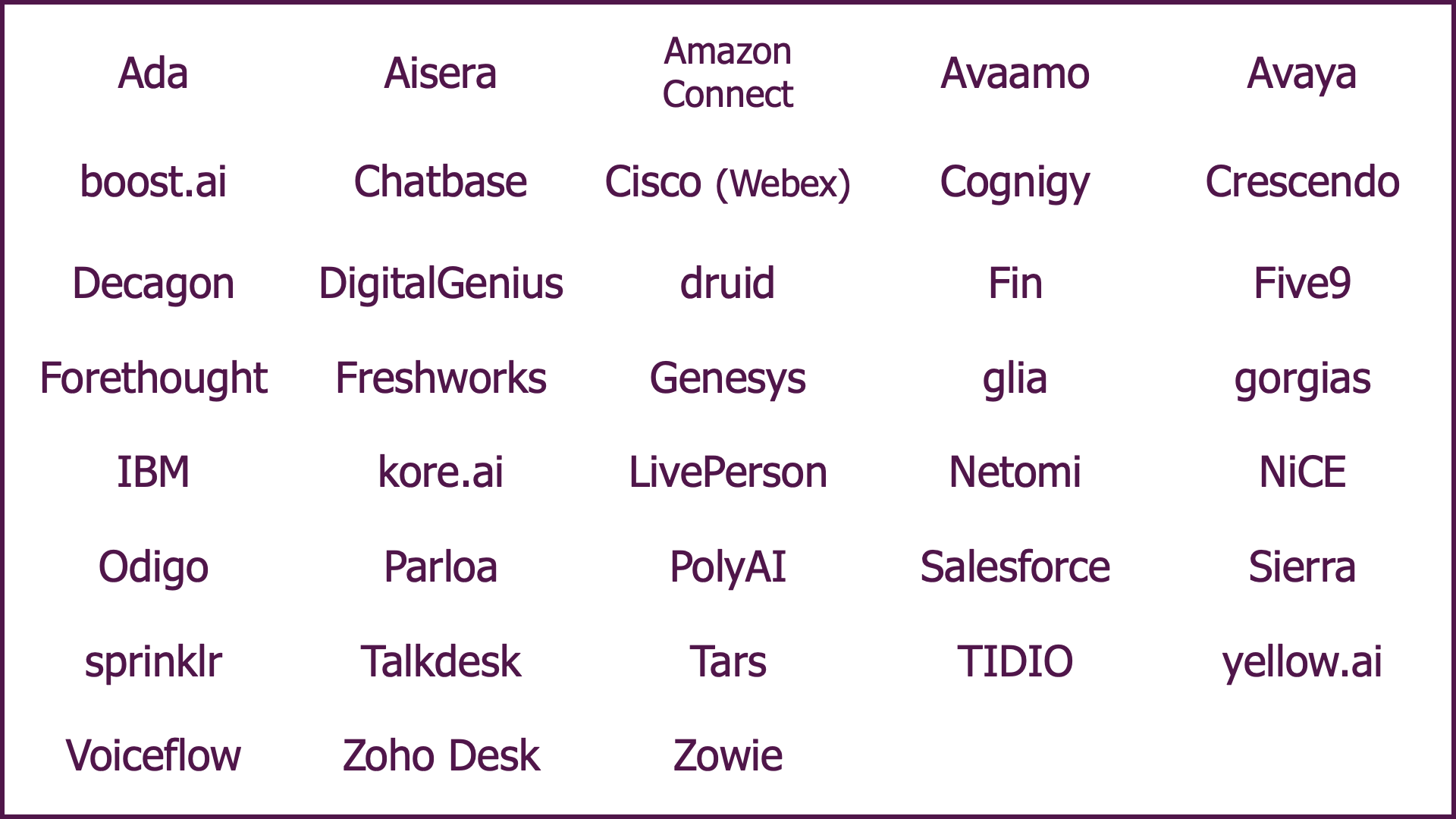
The supplier list is not exhaustive, but it gives a strong indication of the range of choice now facing CX and Digital transformation leaders. It includes established enterprise providers, specialist conversational AI firms, and newer players focused on generative AI from the outset. Some, such as Sierra are winning when it comes to share of voice, while others are working in the background.
The breadth of choice shows how quickly the category has grown. Customer-facing AI is no longer niche. It is becoming a recognised part of the wider CX and digital transformation conversation.
Which organisations are using customer-facing GenAI chatbots?
The providers reviewed appear to have reached a wide range of client organisations providing customer service globally. They span sectors such as banking, retail, telecoms, travel, healthcare, software, e-commerce and business services.
This matters because it shows that AI chatbot adoption is not confined to one sector. It is becoming relevant anywhere organisations need to manage high volumes of interactions efficiently. Regulatory requirements will impact deployment: for example the need for traceability and auditing of individual customer chats is essential in financial services (and in most sectors).
There is, however, an obvious caveat. Case studies show the marketing perspective of deployment and are subject to the following limitations:
• The extent of the technology use is often not disclosed: is it a trial or is it central to the client’s wider service model?
• Was the case study agreed in return for a discount on the commercials for the chatbot?
• Is the technology still being used or has its deployment increased across the client? Or has the client switched to another provider?
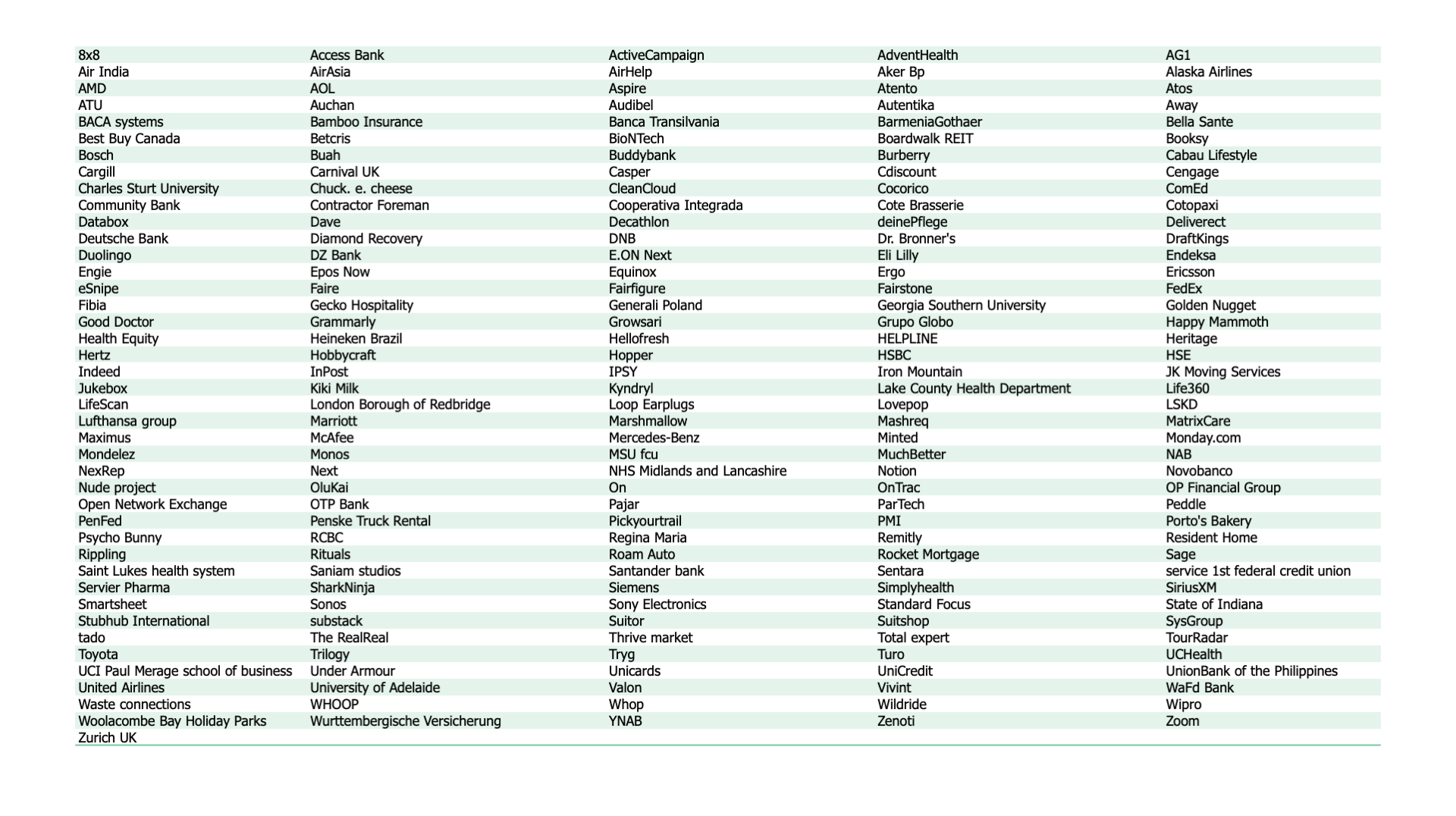
The appendix below shows some of the clients using GenAI chatbots from the technology providers we reviewed.
Claimed features for customer-facing GenAI chatbots
The providers reviewed include a broad range of platforms focused on chat, voice, conversational AI, virtual agents, agentic AI and wider customer contact automation. The top feature claimed was automation and workflow, followed by omnichannel and integration.
Features of GenAI chatbots described by technology providers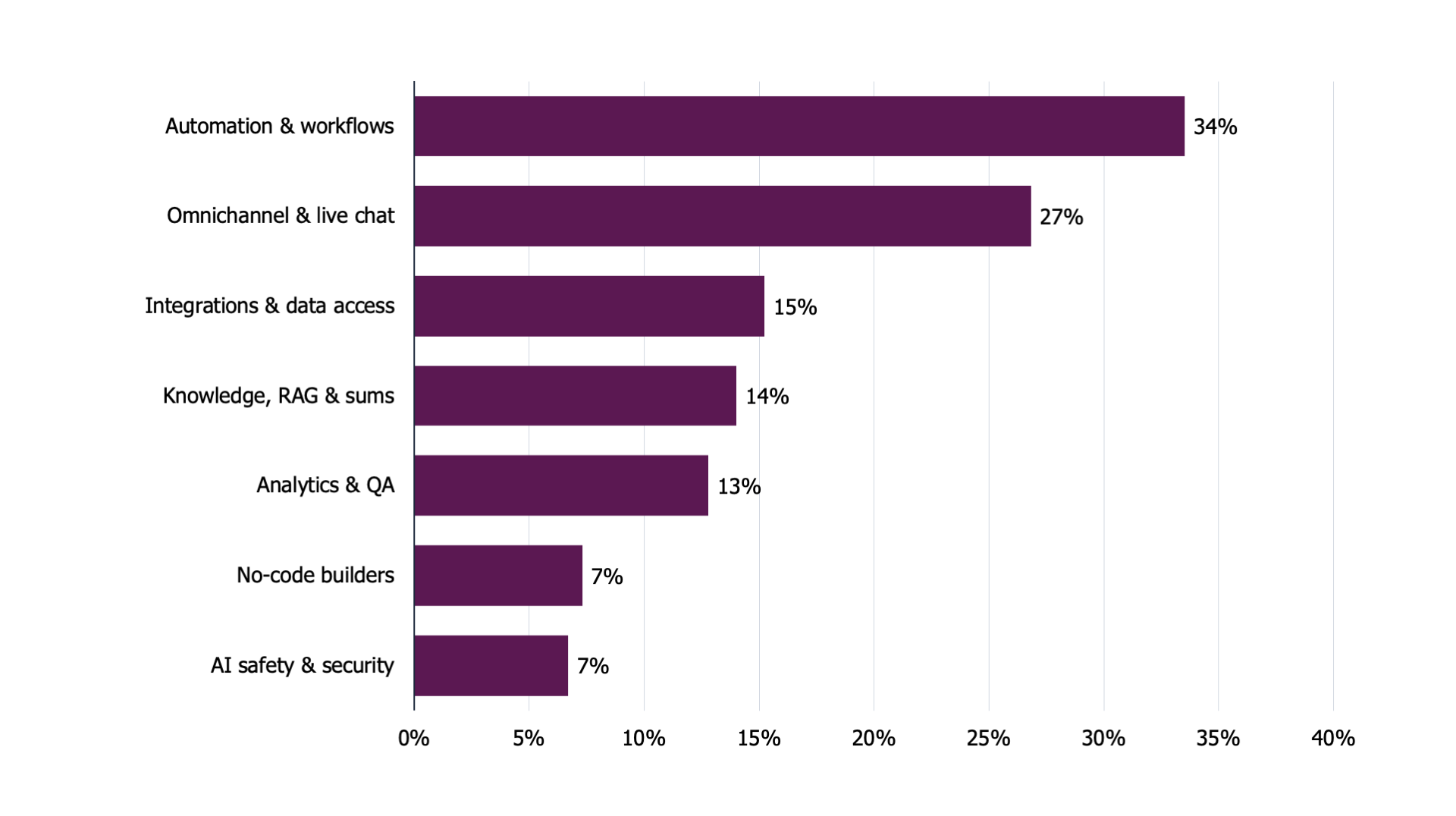 Source: Davies Hickman analysis of 37 providers, 3/2026.
Despite the variety of suppliers in the market, there is a strong level of consistency in how features are described. Different providers use different language, but they often point to the same core capabilities:
• chat and voice support across channels
• conversational AI and natural language understanding
• workflow automation and task completion.
What is interesting is that AI safety and security is one of the least claimed benefits. Davies Hickman knows from discussions with our client organisations that security is a top concern for the deployment of GenAI technologies.
The features shows that customer-facing AI agents are no longer being sold simply as tools to answer questions. They are being positioned as systems that can guide, route, automate and support wider service operations. Agentic AI is increasingly seen as the path forward.
What suppliers collectively say about the benefits
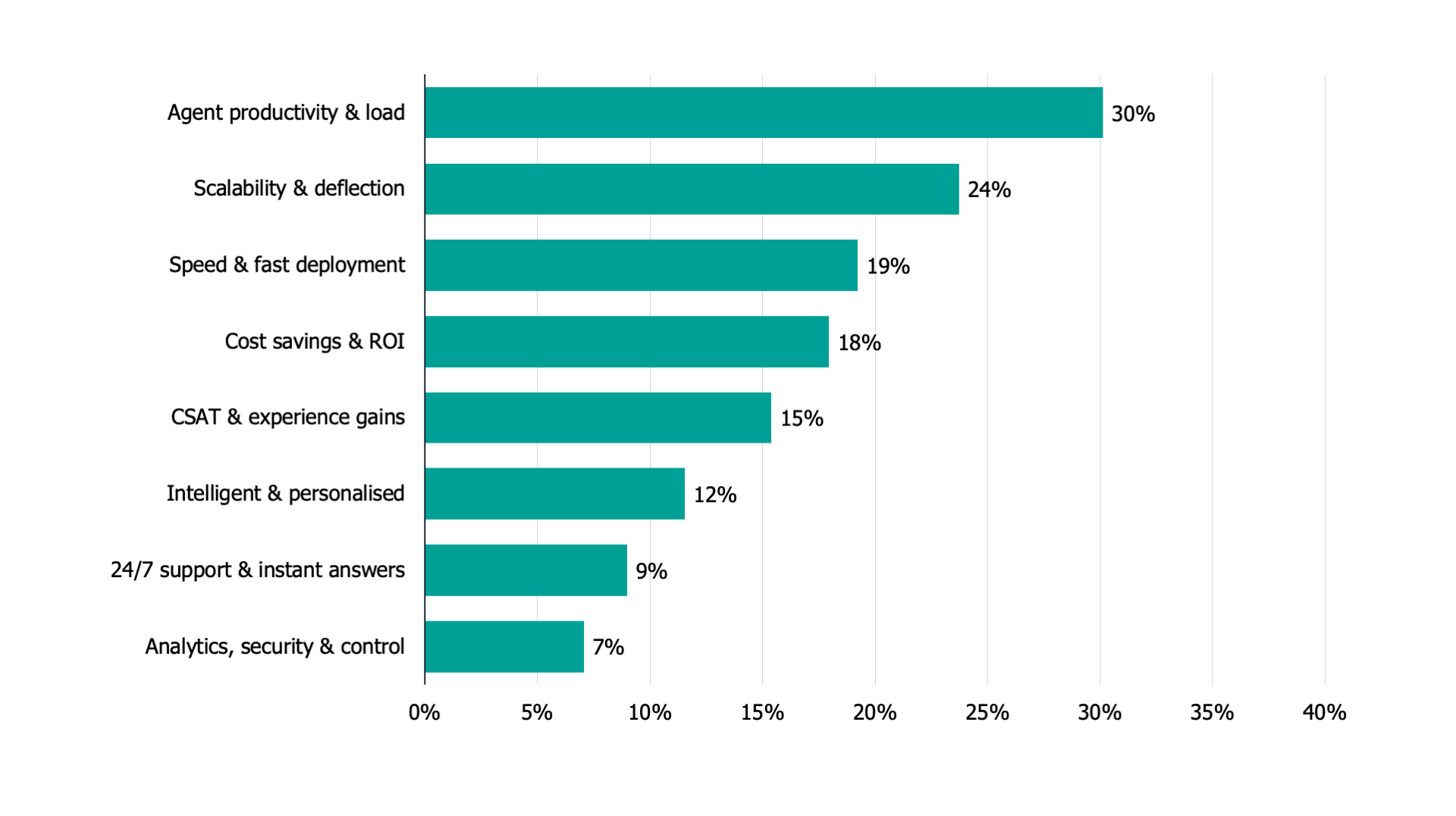
The same consistency appears in the benefits being promoted by providers. Across the suppliers reviewed, the most common claims include:
• agent productivity and load
• scalability and deflection
• speed and fast deployment
• cost savings and ROI.
Benefits of GenAI chatbots described by technology providers
Source: Davies Hickman analysis of 37 providers, 3/2026.
What stands out is that providers are principally selling AI chatbots as cost-saving and efficiency tools. By comparison, customer experience gains are the fifth highest ranked benefit, showing that even technology providers think GenAI may not be a complete match for a good human customer service advisor.
A growing market, but also a crowded one
One of the broader conclusions from the review is that there are simply many more choices for clients than there used to be. That reflects rapid growth, the on-going impact of GenAI, but it also makes comparison harder for organisations wanting to buy a customer-facing GenAI chatbot or transform their customer service delivery. Despite this, forecasts by industry analysts are for a market of multiple billions over the next 5 years. 80%+ adoption predictions abound.
Providers are making similar claims, highlighting similar features, and promising similar benefits. That means differentiation is likely to depend less on marketing language and more on questions such as:
• how well does the platform integrate with existing systems?
• how easily can it be implemented and managed?
• how reliable is it at scale?
• how clear is the evidence of measurable outcomes?
• and finally, what is the impact on customers?
And here the issue is that while there are many deployments of customer facing GenAI chatbots, these still have limited track records.
Customer-facing AI agents are changing CX because they have huge potential to automate customer interactions. For some client organisations this will mean reducing headcount (and costs) while for others it gives the opportunity to improve service levels by redeploying that headcount.
The number of providers now in the market shows how much the category has expanded in a short period of time. The next stage will be less about whether organisations should pay attention to AI agents, and more about which models genuinely work and which suppliers can deliver at scale.
Appendix: Client organisations featured in GenAI chatbot provider case studies
The suppliers reviewed cite a wide range of client organisations across sectors including banking, retail, healthcare, travel, software and public services. While these examples do not always show the full scale of deployment, they do indicate that customer-facing AI agents are already being adopted across a broad mix of organisations globally.