
The latest ONS Business Insights and Conditions Survey on home working suggests a clear and ongoing trend: fewer businesses are saying that they are using, or intending to use, increased home working as a permanent business model.
The pandemic-driven increase in home working has given way to changing intentions among UK businesses, although hybrid working remains the norm for many sectors. This data from ONS excludes financial services and government.
Among large businesses with 250 or more employees, the proportion saying “yes” to using permanent home working fell from 23.5% in May 2025 to 22.0% in November 2025, before falling again to 19.5% in May 2026.
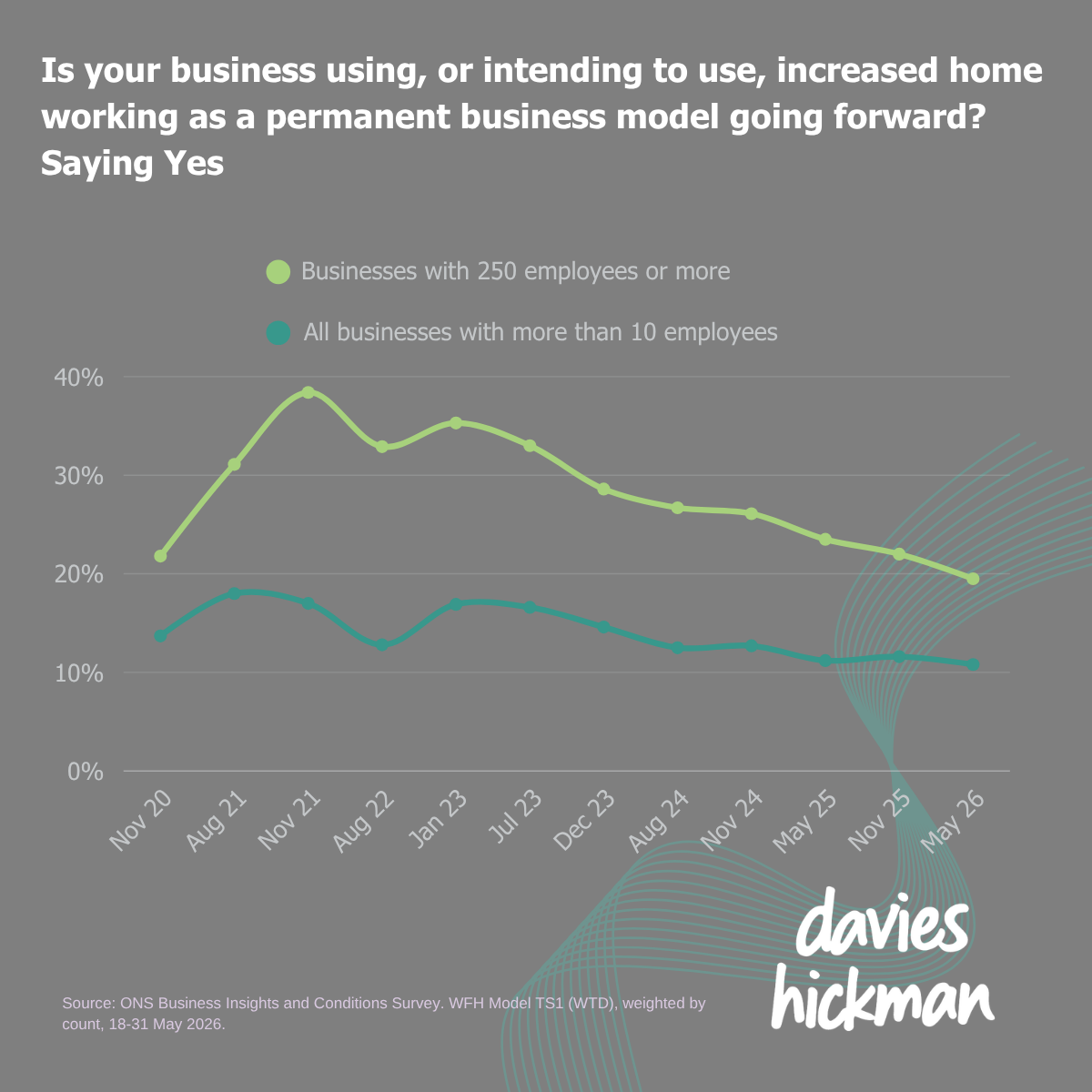
During and immediately after the pandemic, home working became a major part of business planning. It offered flexibility, reduced office costs and helped with recruitment and retention. But as working patterns have settled, we are finding a new equilibrium. This may reflect several factors such as employers wanting more office-based collaboration. Other employers may be reviewing productivity, management, training or customer service needs. Generally, people may miss the social element of working in the office.
Will the trend in the ONS data continue? Hybrid working is the norm with 2 to 3 days a week in the office. However, it presents issues for leaders. Are there enough desks or meeting rooms or pods when more colleagues visit the office? How do we meet employees expectations for Grade A office space with a ‘boutique hotel’ feel (and air conditioning!)? Is collaboration technology maximising simultaneous in-person and at-home communication?
At the same time, the tightening jobs’ marketplace and the need to employ and develop the high numbers of unemployed 18 to 25 year olds, means there is likely to be increased pressure for workers to spend more time in the office.